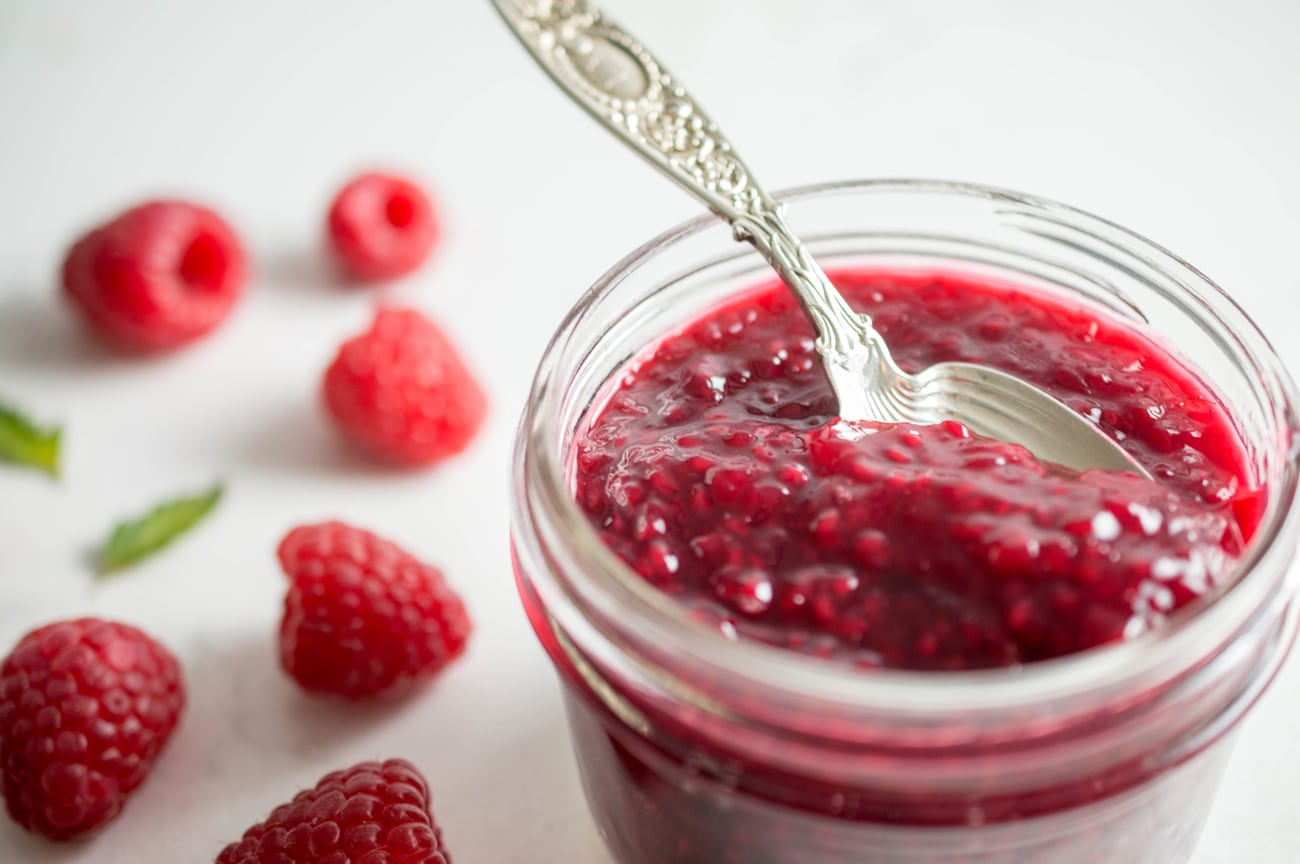
Easy, fruity low-sugar raspberry jam is a fun and satisfying home canning project. You’ll always be glad to have a supply of berry preserves on hand.
Where I live, late summer is the best eating time of year. Local produce stands pop up on almost every corner. This time of year, I visit my favorite farm stand every day.
I pick up all our favorite summer produce like peaches, corn, summer squash, and watermelon. But my absolute favorite thing to buy is fresh local raspberries, which I use to make low sugar raspberry jam.
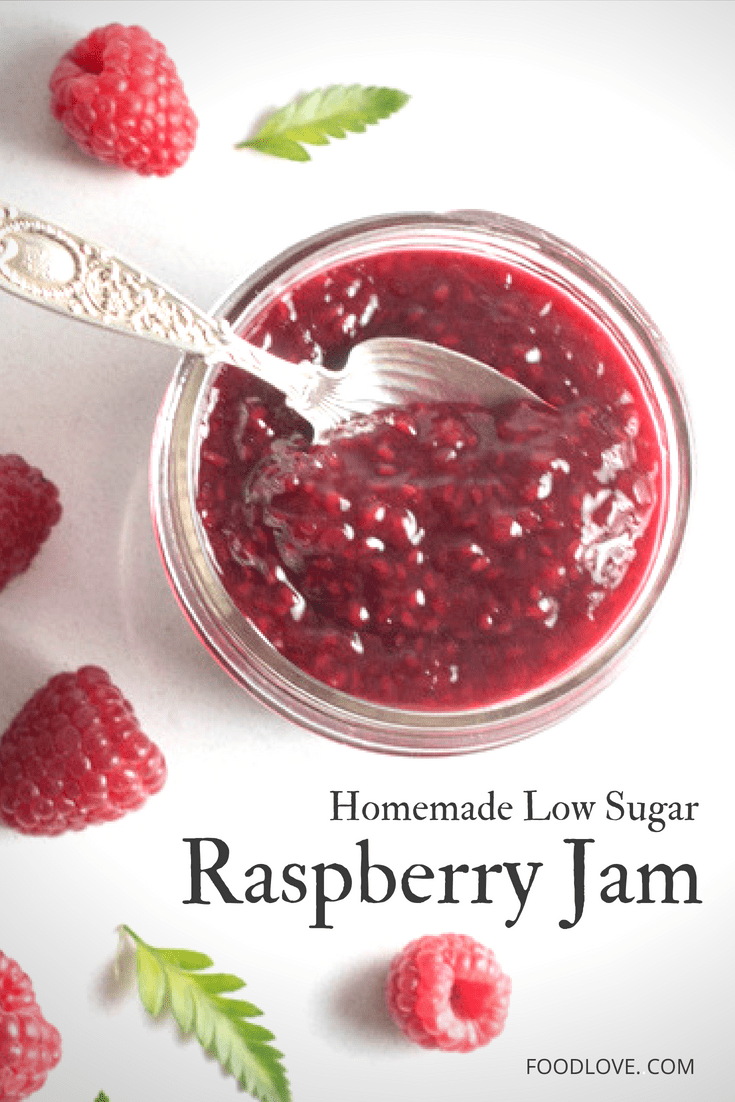
I’m a little obsessed with these local fresh raspberries because of their intense, bright, sweet-tart flavor. I think other people in my hometown love them too. They usually sell out early in the day. If I want to get enough raspberries to make enough low sugar raspberry jam for the year, I have to get to the stand right as the delivery truck arrives!
Because I eat this jam almost every morning, I usually make 3-4 batches of homemade raspberry jam every summer. That way, I have plenty for my family and to give away to friends.

Are Fresh or Frozen Raspberries Best?
If you don’t have a favorite local supplier of raspberries, you can use any fresh raspberries or even frozen raspberries for low sugar raspberry jam.
Frozen raspberries are less expensive. Plus they’re frozen the same day they’re picked, so they have great flavor. If you use frozen raspberries, thaw them before mashing, then measure 5 cups of prepared berries; the whole-berry volume is an estimate.
How To Make Raspberry Jam with Less Sugar
My homemade raspberry jam recipe is easy. However you will need a few important pieces of canning equipment.
Equipment for Home Canning
For this easy raspberry preserves recipe, you’ll need:
- Water bath canner with canning rack
- Half-pint Mason jars with lids and rings
- Jar lifting tongs
- Canning funnel
- Magnetic wand for retrieving lids from hot water (optional)
You can find the jars, rings, canners and all the equipment at stores like Walmart or many grocery stores. Or you can order a canning kit, like this Ball Enamel Water Bath Canner with Utensils
You will also need some regular kitchen equipment for this recipe, such as:
- Colander
- Potato masher
- Large pot, like a soup pot, for boiling the jam
- Wooden spoon or heat-proof silicone spatula, for stirring
- Large spoon for skimming
- Large liquid measuring cup
- Dry measuring cups and spoons
- Ladle
- Small ceramic plates
- Clean kitchen towels
Before you start the canning process, inspect and wash seven half-pint Mason jars. Run your finger around the rim of each jar to make sure it’s not chipped. A chipped jar won’t seal properly. You might not fill all seven jars, but it’s best to have an extra just in case you discover a chip or crack later.

Sterilizing Jars for Homemade Preserves
After you inspect the jars, wash them in the dishwasher or by hand with hot soapy water. Set the clean jars on a drying rack or clean kitchen towel while you move on with the recipe.
For any boiling-water process shorter than 10 minutes, presterilize empty jars by boiling for 10 minutes below 1,000 feet, adding one minute per additional 1,000 feet. Keep jars hot until filling. A dishwasher wash alone is not sufficient for this short process. See NCHFP jar-sterilizing guidance.
In decades past, Mason jar lids needed to be soaked in hot water before using. This step is no longer necessary. Just make sure the lids are clean and dust-free. I wash my lids and rings with hot water, and set them on a clean kitchen towel until I need them.
Once the jars are clean, put 2 small ceramic plates in the fridge, because you will need those later for testing the jam.
Cooking Low-Sugar Raspberry Jam
Next, wash about 8 cups of fresh raspberries. Pick out any leaves you see. Eight cups of whole raspberries should yield 5 cups of mashed raspberries.
This four-ingredient recipe simply calls for fruit, sugar, lemon juice and pectin. Mix the fruit, lemon juice, pectin and 1/4 cup sugar in a large soup pot, and bring it to a full boil.
Then add the remaining sugar to total 3 1/2 cups, and bring it back to a full boil for one minute. A full boil, also called a hard boil, is a boil that doesn’t go away when stirred. Stir the jam the whole time so it doesn’t burn.
You can mash the raspberries with a potato masher or process them in a food processor using the pulse setting. For this jam, I like to use a potato masher.
Once the jam comes to a hard boil a second time for a full minute, test its texture. Remove the jam from the heat. Take one of the cold plates out of the fridge. Pour a small spoonful of jam onto the cold plate. If the jam thickens up to a texture you like, it’s done.
Jam continues setting as it cools. If a cooled batch remains too soft, use the pectin manufacturer’s tested remake directions rather than adding an arbitrary quarter-box of pectin.
Can I Double the Recipe?
If you’re like me and want to make multiple batches of berry jam, I recommend making them one at a time. Doubling or tripling jam recipes will sometimes affect the cooking process. Small-batch means your jars of jam will be as packed with flavor as possible.

What Kind of Pectin is Best?
A key ingredient to this low sugar raspberry jam recipe is low-sugar pectin. You can usually find this in grocery stores where the canning supplies are. Pectin helps the jam thicken. Make sure you get the low sugar pectin and not the regular for this recipe.
Low-sugar pectin helps fruit gel with less sugar; it does not make jam mold-proof. Pectin products differ, so regular pectin and different brands are not automatic substitutes. For pantry storage, use a tested recipe matched to your specific pectin, including the required fruit, sugar, acid, jar size and processing time.

Yes, 3 1/2 cups of sugar is a low-sugar jam recipe! Most jam recipes call for double that! In fact, regular jam like Smucker’s contains more sugar than fruit.
The way I look at low sugar raspberry jam is that it’s a lot of sugar per recipe, but not per serving. A serving of this low sugar raspberry jam is usually one tablespoon, and it will add tons of flavor to your toast, yogurt, or whatever you add it to.
How Thick is Low-Sugar Raspberry Jam?
This jam uses mashed raspberries for a spreadable texture. Its original generic pectin measure does not identify a current tested canning formula. For shelf-stable storage, follow the exact recipe supplied for your pectin product rather than adjusting its proportions. If you cannot confirm a matching tested formula, cool promptly and refrigerate or freeze this jam.

Filling and Sealing the Jam Jars
Once the jam is cooked, use a large spoon to skim off the foam. There’s nothing wrong with the foam, but it doesn’t look pretty.
After skimming, stir gently to distribute the fruit. Keep the jam and jars hot for filling; do not leave the jam to cool for 10 minutes before packing.
Have hot jars and clean lids ready. Prepare lids according to the manufacturer’s instructions.
Fill the mason jars with a ladle and canning funnel. Make sure to leave about 1/4 inch of “headspace,” or empty space, at the top of the jar, so if the food expands during processing, the lid doesn’t blow off!

Next, wipe off the rims with a clean towel. Place the lids on the jars and secure with rings, but don’t screw them on too tight.
How to Boil Filled Jam Jars
Place the rack inside the water bath canner and fill the pot with water. Place the raspberry jam jars carefully into the canner. The water should cover the tops of the jars by at least one inch. When in doubt, follow the directions that come with your water bath canner.
For pantry storage, use the altitude-adjusted processing time in a tested raspberry-jam recipe matched to your exact pectin and jar size. Once processing is complete, follow the canner’s cooling directions, lift jars upright and leave them undisturbed for 12–24 hours before checking seals. Refrigerate unsealed jars promptly.
Making your own low-sugar raspberry jam is totally worth the effort! Homemade jam also makes a great neighbor gift. Give it a try and let me know how it turns out!
More Low-Sugar Jam Recipes
- Peach Vanilla Jam (Low Sugar Recipe)
- Low Sugar Peach Jam
- Low Sugar Blueberry Jam
- Low Sugar Strawberry Jam
Raspberry jam questions
Is this seedless jam or raspberry jelly?
No. This recipe keeps the mashed berries and their seeds. Straining out seeds changes the prepared-fruit amount; use a separate tested seedless recipe for that variation.
Can I leave out the sugar?
This recipe contains 3 1/2 cups of sugar. A low-sugar pectin label does not mean you can omit sugar from any recipe. Choose a tested no-sugar-added formula if that is what you want.
How do I store an opened jar?
Refrigerate after opening and use a clean spoon. Lower-sugar spreads can deteriorate sooner than regular jam. Discard the entire jar if it develops mold, fermentation or other spoilage. See NCHFP jam storage guidance.

Low Sugar Raspberry Jam
Equipment
Ingredients
- 8 cups fresh raspberries to yield 5 cups mashed raspberries (see note for using frozen raspberries)
- 3 ½ cups white sugar
- 1 box low sugar pectin
- 3 tablespoons lemon juice either fresh or bottled
Equipment:
- 6 half-pint Mason jars with lids
- Potato masher
- Ladle
- Large wooden spoon or silicone spatula for stirring
- Large wide pot like a soup pot for cooking
- Water bath canner
- Canning funnel
- Jar lifting tongs
Instructions
- Wash and inspect six half-pint canning jars. For a processing time under 10 minutes, sterilize empty jars in boiling water for 10 minutes below 1,000 feet, adding 1 minute for each additional 1,000 feet of elevation. Keep jars hot until filling; a dishwasher wash alone is not sterilization for this short process. Prepare lids according to their manufacturer. Chill two small ceramic plates for checking the jam.
- Wash the raspberries, and pick off any leaves. Mash them with a potato masher, or process carefully with a food processor to get the texture you want. Measure the sugar, and reserve ¼ cup to mix with the pectin.
- Mix the pectin, lemon juice, and ¼ cup sugar in a small bowl or measuring cup.
- Place the raspberries in a large cooking pot, and add the pectin mixture. Over medium high heat, bring everything to a full boil that does not go down when stirred. Stir the entire time so the jam does not burn. At this point, add the rest of the sugar, stir well, and bring the jam back to a full boil for one minute. Remove from the heat. Jam continues setting as it cools; a cold-plate test is an early texture check. If a cooled batch is too soft, follow the pectin manufacturer’s tested remake directions rather than adding an arbitrary extra amount.
- Skim off foam. Keep the jam hot for filling; gently stir to distribute the fruit. Have clean lids ready according to the lid manufacturer’s directions. Do not leave the jam to cool before packing it into hot jars.
- Fill your jars, using the ladle and funnel, leaving 1/4 inch of clearance space at the top of the jar.
- Wipe the rims of the jars with a clean, damp towel. Place the lids on the jars and secure with rings. Do not screw the rings on too tight.
- For shelf-stable storage, use a tested raspberry-jam recipe matched to your specific low/no-sugar pectin, including its ingredient proportions, jar size, headspace and altitude-adjusted processing time. Pectin brands and package sizes are not interchangeable. Do not assume this older recipe’s generic box measure establishes a tested canning formula. If you cannot confirm a matching tested formula, cool promptly and refrigerate or freeze the jam instead of storing it in the pantry.
- For jars processed using a matching tested canning formula, turn off the heat, remove the canner lid and wait 5 minutes before lifting the jars upright onto a towel. Cool undisturbed for 12–24 hours, then check seals and remove the bands. Refrigerate unsealed jars promptly. Label and store properly processed, sealed jars in a cool, dark, dry place; use within a year for best quality. Refrigerate after opening and discard the entire jar if mold or other spoilage appears.
Notes
Disclosures: The author was not compensated by any person or company for the content of this post. The post may contain affiliate links. If you buy a product using these links, we receive a commission. This helps with the cost of publishing recipes on this website.
For more recipes like this one, follow us on Pinterest, follow us on Twitter or like us on Facebook.


This recipe works great!! I used it on red raspberries and golden raspberries. Delicious! The only thing I changed was to add about a teaspoon of butter to the pot while cooking. It greatly reduces, even eliminates the foam. Just keep stirring! 🙂 Thank you for posting!
Thank you, Michelle! That’s a good tip about the butter – I have tried that before, and it definitely works.
Used this recipe for my first time canning blackberries and things went so well! Thanks for sharing!
Thanks, Alyssa! That’s great to hear!
Sadly, this recipe did not work for me. Even after adding 2 more Tablespoons of RealFruit Pectin, the consistency was not thick enough. I will use it as a syrup for pancakes.
Oh dear! That’s so frustrating! I’m sorry it didn’t work out for you. I’ve made this recipe probably 20 times, and for me it produces a jam that’s a little on the firm side if anything.
If your jam turns out runny, the most common causes are not enough sugar, not enough pectin, or the wrong kind of pectin. It’s important for this low sugar recipe to use the low sugar pectin. Also, the jam might thicken up after 24-48 hours, especially if you put it in the refrigerator. Here is a helpful article on the causes of runny jam: https://foodinjars.com/blog/jam-didnt-set-what-to-do/.
Using the jam as a pancake topping or a sauce for desserts is a good idea!
I have powdered, low sugar pectin, and it comes in a jar. Are you able to give me a measure for the pectin in your recipe? I’m relatively new to making jam with pectin (my folks made jam without when I was a kid and I remember it being an all day endeavor) and recently I messed up because I used liquid pectin in a recipe that apparently was calling for powdered pectin ????????♀️. So as much detail as you can give me would be SUPER appreciated! Thank you!
Hi Kathryn,
There are 3 tablespoons of powdered pectin in this recipe. Good luck, and let me know how it goes!
How much pectin was in your “1 box”? I have a jar of low sugar pectin.
There are 3 tablespoons of pectin in a box. Happy jamming!