Spread the love!
A Homemade Za’atar Recipe Full of Bold Flavor
Every time I open my spice drawer and see the little jar labeled “za’atar,” I’m reminded of how this habit started on a whim. I found myself experimenting with spices I had on hand, trying to mimic a blend I had tasted on a trip to a Mediterranean market. My version included an extra squeeze of lemon intensity, a flavor my family now expects.
It used to be a minor inconvenience not having this blend ready when a craving struck. Buying it wasn’t always practical, especially when I wanted to tweak the balance for a specific dish. Eventually, I settled into the satisfying ritual of making my own, ensuring I could capture that distinct aroma I so loved from the market.
Crafting my own seasoning has also become a way to keep control over my pantry inventory. Knowing exactly what’s included gives me peace of mind, especially when I’m trying to keep our meals clean and straightforward without hidden ingredients. My small batches guarantee freshness and allow me to adjust the flavors to suit whatever we’re in the mood for.
Why Make Your Own za’atar seasoning recipe
The benefits of creating your own za’atar blend are many and varied.- Customization: Adjust the spices to suit any dish or preference.
- Freshness: Homemade batches ensure a vibrant flavor profile.
- Ingredient Control: Know exactly what goes into your mixture.
- Cost-Effective: Save money by using pantry staples you already have.
- Versatile: Use it on meats, breads, or vegetables easily.
- Simple to Make: Quickly combine ingredients with minimal equipment.
The Flavor Breakdown
Every spice in za’atar seasoning recipe contributes something specific to the blend — here’s how they work together:- Thyme: Provides a herbal lift with subtle minty and earthy notes.
- Oregano: Adds a robust herbaceous flavor with a slight peppery finish.
- Sumac: Imparts a bright, citrus-like tartness that enhances freshness.
- Sesame Seeds: Lends a nutty aroma and mild crunch to the mix.
- Salt: Balances flavors and brings out the natural taste of other ingredients.
How to Make It
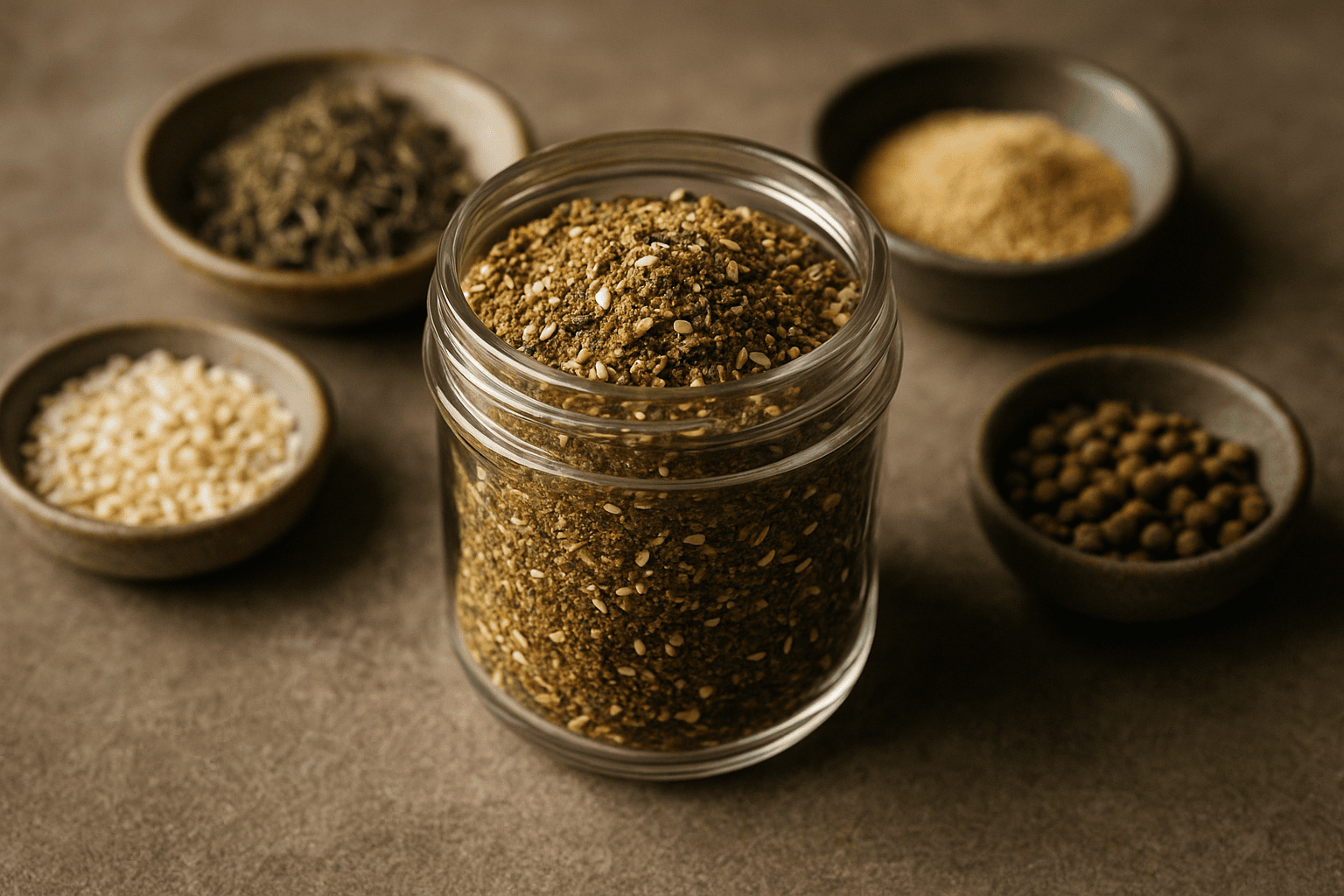
- Gather your ingredients: dried thyme, sesame seeds, sumac, oregano, and salt.
- In a large bowl, mix the dried thyme, sesame seeds, sumac, and oregano. Stir gently with a spoon to combine them effortlessly.
- Add a pinch of salt, adjusting to taste. Notice how the colors come together beautifully.
- Blend them in a spice grinder until you achieve a uniform texture. A few small clumps are normal, adding character to the seasoning.
How to Use It
- Sprinkle za’atar over olive oil-touched flatbreads for a flavorful punch.
- Mix it with olive oil as a flavorful marinade for meats or vegetables.
- Garnish creamy hummus with a sprinkle of za’atar for a fragrant twist.
- Use it to season roasted or grilled chicken for an aromatic boost.
Storage and Shelf Life
Store your za’atar seasoning in a cool, dry place. An airtight jar is ideal to maintain its freshness and vibrant flavor. For the best taste, use your za’atar within six months. Over time, some of its vivid notes may start to mellow. Remember to shake the jar before each use to re-awaken its delightful aromas.FAQ
What can I substitute for sumac? A mix of lemon zest and a hint of vinegar can mimic sumac’s tangy life. Can I use fresh thyme instead of dried? Fresh thyme can be used, but it may slightly alter the texture. Drying your own is a great alternative. How much za’atar should I use? Start with a small pinch, and increase to taste. Its vibrant personality shines through easily.Conclusion
With its zesty, earthy blend of flavors, za’atar seasoning is an incredibly versatile addition to your culinary repertoire. Simple to make yet robust in its ability to elevate dishes, it is a delightful companion for any home cook eager to explore the rich aromas of Middle Eastern cuisine.More Mediterranean & Middle Eastern Seasonings
Use these blends on flatbreads, roasted veggies, chicken, and salads.- Mediterranean Chicken Seasoning – Herb-forward and bright.
- Greek Seasoning Blend – Versatile Mediterranean flavor.
- Gyro Seasoning Recipe – Made for classic gyro-style dishes.
- Baharat Spice Mix – Warm, aromatic Middle Eastern spice.
- Garlic Herb Seasoning Blend – Simple, savory herbs.
Za'atar Seasoning Recipe
A fresh and simple za’atar seasoning blend to elevate any dish. Customize it to match your flavor profile.

PREP TIME
10 mins
ADDITIONAL TIME
0 mins
TOTAL TIME
10 mins
COURSE
Seasoning / Spice Mix
CUISINE
Middle Eastern / Mediterranean
SERVINGS
12 tablespoons
CALORIES
12 kcal
EQUIPMENT

INGREDIENTS
- 2 tablespoons dried thyme (ideally za’atar thyme, but standard dried thyme works)
- 2 tablespoons dried oregano or dried marjoram (regional blends vary; using one or a mix is authentic)
- 3 tablespoons sumac (Levantine za’atar is often sumac-forward for brightness)
- 2 tablespoons toasted sesame seeds
- ½–1 teaspoon fine sea salt (optional, based on tradition and preference)
INSTRUCTIONS
- In a small mixing bowl, combine thyme, sesame seeds, and sumac.
- Add oregano, marjoram, garlic powder, and onion powder to the bowl.
- Sprinkle in the smoked paprika and cayenne pepper if you prefer a bit of heat.
- Stir in the mushroom powder and salt for added depth and umami.
- Use a whisk to combine all ingredients thoroughly.
- Transfer the mixture to an airtight spice jar using a small funnel for easy pouring.
- Label and store in a cool, dark place.
- Enjoy on anything from salads to roasted vegetables.
NUTRITION
Serving: 1 tbsp
Calories: 12kcal
Carbohydrates: 2g
Protein: 0g
Fat: 0g
KEYWORD
za’atar seasoning recipe, homemade seasoning, spice blend, pantry staples, meal prep
Did you make this recipe?